Leafing vs. Non-Leafing Aluminum Paste: Which One Is Right for Your Coating?
2026 / 08 / 121. What Is Leafing Aluminum Paste?
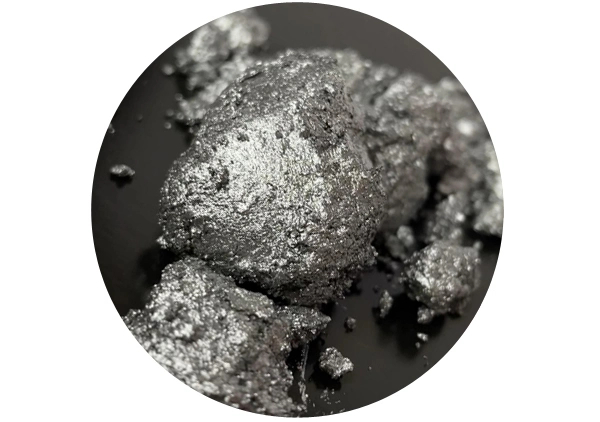
Leafing aluminum paste is designed so that aluminum flakes migrate toward the surface of the coating film during the drying process.
The flakes overlap and arrange themselves relatively parallel to the surface, creating a highly reflective metallic layer.
This unique orientation gives leafing aluminum paste its characteristic bright silver appearance.
Main Characteristics
- High metallic brightness
- Strong reflectivity
- Excellent surface coverage
- Strong metallic appearance
- Good barrier effect
Because the aluminum flakes concentrate near the coating surface, leafing aluminum paste is particularly suitable for applications where surface appearance and reflectivity are important.
Typical Applications
- Decorative coatings
- Reflective coatings
- Aerosol paints
- Leather coatings
- Bicycle coatings
- Certain metal coatings
-
Decorative steel finishes
2. What Is Non-Leafing Aluminum Paste?
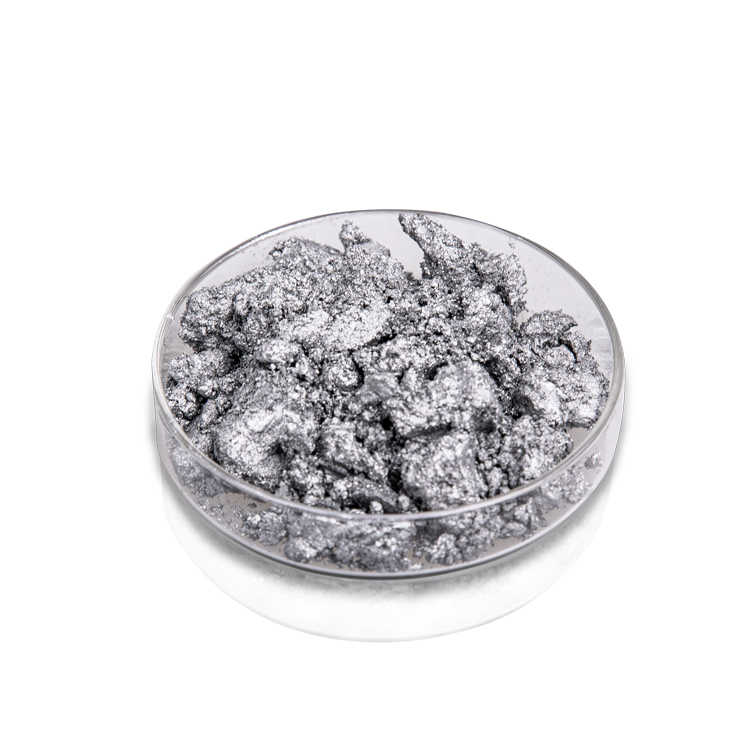
Unlike leafing pigments, non-leafing aluminum paste remains distributed throughout the coating film.
The aluminum flakes do not intentionally migrate to the surface. Instead, they are dispersed within the resin matrix.
This structure provides a different combination of metallic appearance, adhesion, durability, and coating performance.
Main Characteristics
- Uniform pigment distribution
- Good coating adhesion
- Excellent durability
- Flexible metallic appearance
- Suitable for many industrial coating systems
Non-leafing aluminum paste is widely used when the aluminum pigment needs to become an integrated part of the coating film rather than form a reflective layer on the surface.
Typical Applications
- Automotive coatings
- Industrial coatings
- Wheel coatings
- Plastic coatings
- Powder coatings
-
Protective coatings
3. What Is the Main Difference?
The most important difference is where the aluminum flakes are located within the coating film.
Leafing Aluminum Paste
The flakes move toward the surface:
Coating Surface
━━━━━━━━━━━━
▰ ▰ ▰ ▰ ▰
Aluminum flakes
━━━━━━━━━━━━
Substrate
This arrangement creates strong light reflection and a bright metallic finish.
Non-Leafing Aluminum Paste
The flakes remain distributed throughout the coating:
Coating Surface
━━━━━━━━━━━━
▰ ▰ ▰
▰ ▰ ▰
▰ ▰ ▰
━━━━━━━━━━━━
Substrate
This allows the metallic pigment to become more integrated into the coating film.
4. Leafing vs. Non-Leafing Aluminum Paste
| Performance | Leafing Aluminum Paste | Non-Leafing Aluminum Paste |
| Flake orientation | Toward coating surface | Distributed throughout film |
| Metallic brightness | Very high | High |
| Reflectivity | Excellent | Very good |
| Surface metallic effect | Strong | Uniform |
| Adhesion integration | Moderate | Excellent |
| Durability | Application-dependent | Generally excellent |
| Typical use | Decorative & reflective coatings | Automotive & industrial coatings |
| Main advantage | Bright metallic finish | Balanced coating performance |
Neither type is universally better.
The correct choice depends on what you want the finished coating to achieve.
5. When Should You Choose Leafing Aluminum Paste?
Choose leafing aluminum paste when the primary goal is a strong, bright, reflective metallic appearance.
It is particularly suitable when you want:
Strong Metallic Brightness
The surface-oriented aluminum flakes act like tiny reflective mirrors, creating a bright silver appearance.
High Reflectivity
The dense flake arrangement improves directional light reflection.
Decorative Surface Effects
For decorative coatings where appearance is more important than deep integration into the coating film, leafing aluminum paste can be an effective choice.
Reflective Applications
Applications requiring strong light reflection can also benefit from the leafing structure.
6. When Should You Choose Non-Leafing Aluminum Paste?
Choose non-leafing aluminum paste when the aluminum pigment needs to remain integrated within the coating film.
It is often preferred for applications requiring a balance between metallic appearance and coating performance.
Automotive Coatings
Automotive finishes often require controlled metallic appearance, good adhesion, durability, and consistent color.
Industrial Coatings
Industrial coatings may require resistance to weathering, mechanical damage, and environmental exposure.
Plastic Coatings
Non-leafing aluminum paste can provide a uniform metallic effect while remaining incorporated into the coating film.
Wheel Coatings
Wheel coatings require both attractive metallic appearance and good coating durability.
7. Particle Size Also Matters
Choosing between leafing and non-leafing aluminum paste is only the first step.
Particle size also has a significant effect on the final metallic appearance.
| Particle Size | Typical Appearance |
|---|---|
| Fine | Smooth and refined |
| Medium | Balanced metallic appearance |
| Large | Strong sparkle and visual impact |
For example, a coating manufacturer may choose a fine-particle non-leafing aluminum paste for a smooth automotive finish, while a decorative coating manufacturer may prefer a larger-particle leafing product for stronger metallic sparkle.
Therefore, the right product should be selected based on the complete formulation rather than a single performance parameter.
8. How to Choose the Right Aluminum Paste
For coating manufacturers, we recommend the following four-step selection process.
Step 1: Define Your Application
First determine whether the product will be used for:
- Automotive paint
- Industrial coatings
- Decorative coatings
- Plastic coatings
- Wheel coatings
- Aerosol paint
- Reflective coatings
Different applications have different pigment requirements.
Step 2: Define Your Desired Metallic Effect
Ask whether you need:
- Maximum brightness
- Strong reflectivity
- Smooth metallic appearance
- Strong sparkle
- Uniform metallic texture
Step 3: Select Leafing or Non-Leafing
As a general guideline:
Strong surface brightness → Leafing aluminum paste
Integrated metallic effect + durability → Non-leafing aluminum paste
Step 4: Conduct Sample Testing
Before placing a bulk order, test the aluminum paste in your actual coating formulation.
This is particularly important because resin, solvent, additives, pigment concentration, and application conditions can all affect the final metallic appearance.
9. Why Work With an Experienced Aluminum Paste Manufacturer?
For international coating manufacturers, product selection is only part of the purchasing decision.
A reliable aluminum paste manufacturer should also provide:
- Stable batch quality
- Consistent particle size
- Customized metallic effects
- Technical data sheets
- Sample testing
- Technical support
- Stable bulk supply
- Competitive wholesale pricing
Zhangqiu Metallic Pigment Co., Ltd. (ZQ Metallic Pigment) specializes in aluminum paste, aluminum powder, bronze powder, and other metallic pigments for global customers.
Our production and quality-control capabilities allow us to provide different aluminum pigment solutions according to customer requirements, including leafing and non-leafing aluminum paste.
For customers with specific requirements, we can discuss particle size, metallic effect, application system, and other technical parameters before recommending a product.
10. Customer Application Example
A decorative coating manufacturer was looking for a brighter silver metallic finish for a range of metal products.
The customer initially used a standard non-leafing aluminum paste but found that the final coating did not provide the desired surface reflectivity.
After testing a suitable leafing aluminum paste, the customer achieved a stronger surface metallic effect and improved visual brightness.
This example highlights an important point:
The best aluminum paste is not necessarily the brightest product in the catalog. It is the product that matches the customer's coating system and desired final appearance.
11. Conclusion: Leafing or Non-Leafing?
So, which aluminum paste is right for your coating?
If your priority is maximum surface brightness, reflectivity, and a strong decorative metallic effect, leafing aluminum paste is usually the better starting point.
If you need uniform metallic appearance, strong integration with the coating film, and balanced durability, non-leafing aluminum paste is generally more suitable.
However, the final selection should always be confirmed through formulation testing.
At ZQ Metallic Pigment, we help coating manufacturers select the appropriate aluminum pigment according to their application, metallic effect, particle size, and coating system.
- Previous:Aluminium Pigments for Cool Roof Coatings: Improving Heat Reflection and Energy Efficiency
- Next:I have no