Aluminum Paste for Automotive Basecoat: What Paint Manufacturers Should Know | ZQ Metallic
2026 / 09 / 09Aluminum paste plays an important role in producing metallic and silver finishes for automotive paints. However, choosing the right aluminum paste for automotive basecoat is not simply a matter of selecting the brightest grade.
Different automotive coating layers have different functions, and the aluminum paste must match the coating system, resin, application method and desired metallic appearance.
For paint manufacturers, understanding the difference between automotive primer and basecoat, as well as the characteristics of different aluminum paste grades, can help improve metallic appearance, dispersion and production consistency.
1. Why Is Aluminum Paste Used in Automotive Paint?
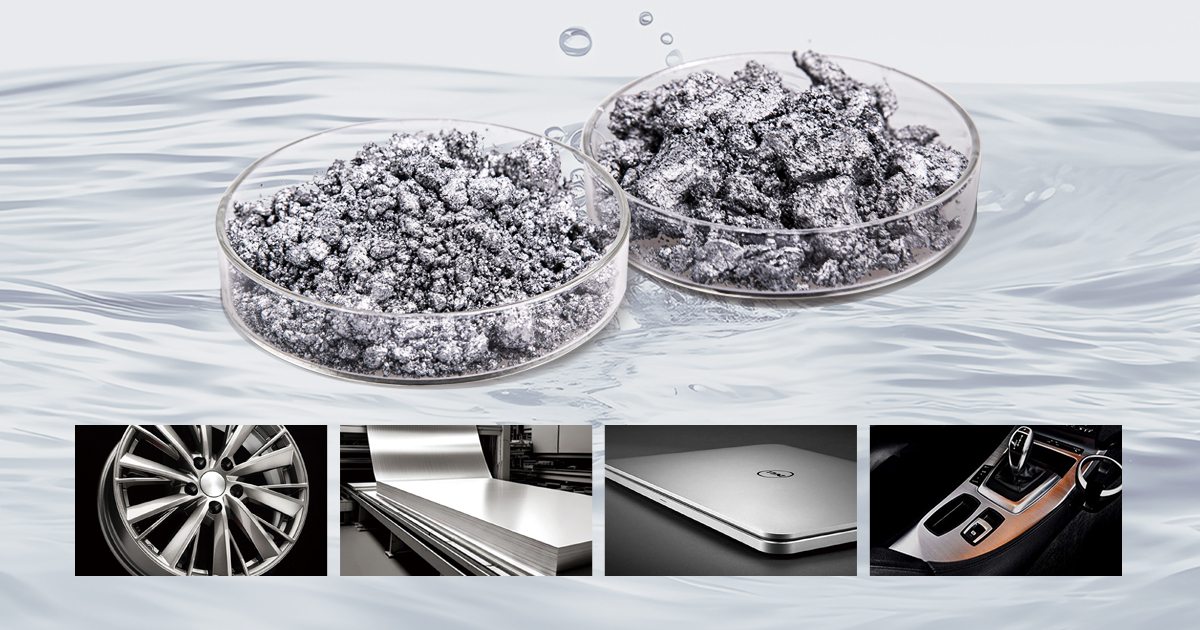
Aluminum paste is a metallic pigment consisting of fine aluminum flakes dispersed in a suitable carrier system.
When incorporated into automotive coatings, the aluminum flakes reflect incident light and create a metallic appearance.
Depending on the selected grade and formulation, aluminum paste can help produce:
- Silver automotive colors
- Metallic gray finishes
- Bright silver effects
- Fine metallic effects
- Sparkling metallic effects
- High-gloss metallic finishes
- Special metallic appearances
This makes automotive aluminum paste particularly important in metallic basecoats and other decorative automotive coating systems.
However, the final appearance does not depend on aluminum paste alone. Resin selection, pigment dispersion, flake orientation, film thickness and application conditions can all influence the final result.
2. Automotive Primer vs. Basecoat: Where Is Aluminum Paste Used?
One of the most common questions from automotive coating manufacturers is whether aluminum paste should be used in primer.
In a conventional automotive coating system, primer and basecoat perform different functions.
| Coating Layer | Main Function | Aluminum Paste |
|---|---|---|
| E-coat | Corrosion protection and adhesion | Generally not used |
| Primer | Filling, protection and surface preparation | Generally not the main application |
| Basecoat | Color and appearance | Common application |
| Metallic Basecoat | Metallic color and visual effects | Highly suitable |
| Clearcoat | Gloss, protection and durability | Generally not used as the main pigment |
The main purpose of automotive primer is usually protection, adhesion and surface preparation rather than creating a visible metallic appearance.
By comparison, the automotive basecoat is responsible for color and visual appearance. This is where aluminum paste becomes particularly important.
Therefore, if a customer is looking for aluminum paste for automotive coatings, it is important to determine whether the intended application is primer, basecoat or another coating layer before selecting a grade.
3. What Type of Aluminum Paste Is Suitable for Automotive Basecoat?
There is no single aluminum paste that is best for every automotive paint formulation.
The appropriate grade depends on the desired metallic effect and coating system.
Fine Aluminum Paste
Fine aluminum paste is often considered when a smooth and refined metallic appearance is required.
It can be suitable for:
- Fine silver finishes
- Smooth metallic colors
- Refined automotive coatings
- Applications requiring a more uniform visual appearance
Fine particles can produce a relatively smooth metallic texture, but formulation and dispersion remain important for achieving a uniform finish.
High-Brightness Aluminum Paste
When a strong metallic reflection is required, manufacturers may choose a high-brightness aluminum paste.
It can be considered for:
- Bright silver automotive colors
- High-reflectivity metallic finishes
- Premium metallic appearances
- High-gloss coating systems
Brightness is influenced not only by particle size but also by flake morphology, surface treatment, orientation and dispersion.
Non-Leafing Aluminum Paste
Non-leafing aluminum paste remains distributed throughout the coating film rather than intentionally floating to the surface.
This type can be considered when the coating requires:
- Uniform metallic color
- Consistent pigment distribution
- Good compatibility with the coating system
- Controlled metallic appearance
For many automotive basecoat applications, non-leafing aluminum paste is an important option because the desired appearance depends on controlled flake distribution within the coating film.
Water-Based Aluminum Paste
With the increasing use of waterborne coating systems, manufacturers may need water-based aluminum paste for automotive basecoat applications.
Water-based systems require special attention to:
- Water compatibility
- Dispersion
- Storage stability
- Hydrogen gassing resistance
- Resin compatibility
- Metallic brightness
- Flake orientation
A conventional solvent-based aluminum paste should not automatically be used in a water-based automotive coating system.
The pigment should be specifically evaluated for compatibility with the complete waterborne formulation.
4. How Does Particle Size Affect Automotive Aluminum Paste?
Particle size is one of the most important parameters when selecting aluminum paste.
In general, different particle sizes can create different visual effects.
Fine particles can contribute to a smoother and more refined metallic appearance.
Medium particles can provide a balance between metallic brightness and visible texture.
Larger particles can create stronger sparkle and a more pronounced metallic effect.
However, particle size should not be evaluated independently.
The final appearance can also be affected by:
- Flake thickness
- Flake shape
- Surface treatment
- Flake orientation
- Pigment concentration
- Resin system
- Dispersion quality
- Film thickness
- Spray conditions
Therefore, automotive paint manufacturers should evaluate the complete formulation rather than selecting aluminum paste only according to particle size.
5. Why Is Flake Orientation Important in Automotive Basecoat?
The orientation of aluminum flakes has a major influence on metallic appearance.
When aluminum flakes are properly distributed and oriented within the coating film, light can be reflected more consistently, helping create a uniform metallic appearance.
Poor orientation may result in:
- Uneven metallic appearance
- Reduced brightness
- Cloudiness
- Color variation
- Poor flop
- Visible application differences
This is why aluminum paste for automotive paint should be evaluated together with the resin, additives and application process.
Mixing conditions can also affect pigment performance. Excessive shear or unsuitable dispersion procedures may damage the desired flake structure or affect orientation.
6. How to Choose Aluminum Paste for Automotive Coatings?
Paint manufacturers can follow several steps when selecting an automotive aluminum paste.
Step 1: Identify the Coating System
First determine whether the product will be used in:
- Solvent-based automotive paint
- Water-based automotive paint
- Automotive basecoat
- Metallic basecoat
- Automotive refinish paint
- Other specialty automotive coatings
The coating system determines the compatibility requirements for the aluminum paste.
Step 2: Define the Target Metallic Effect
Next, identify the appearance required by the final coating.
For example:
- Fine silver
- Bright silver
- Metallic gray
- High-brightness silver
- Sparkling metallic
- Smooth metallic
This helps narrow down the appropriate particle size and aluminum paste grade.
Step 3: Evaluate Dispersion
Good dispersion is essential for achieving consistent metallic appearance.
The aluminum paste should disperse effectively in the selected coating system without creating excessive agglomeration or uneven distribution.
Step 4: Check Resin Compatibility
The resin and solvent system can influence flake orientation and final appearance.
Before bulk purchasing, manufacturers should test the aluminum paste in their actual formulation.
Step 5: Conduct a Spray Test
Laboratory evaluation should ideally include an application test under conditions close to actual production.
Evaluate:
- Metallic brightness
- Color consistency
- Flake orientation
- Surface appearance
- Hiding power
- Dispersion
- Reproducibility
A sample test provides much more useful information than relying on a product specification sheet alone.
7. What Should Manufacturers Consider When Buying Automotive Aluminum Paste?
Price is important, but it should not be the only purchasing criterion.
Automotive coating manufacturers should also evaluate:
| Factor | Why It Matters |
|---|---|
| Particle Size | Influences metallic texture and sparkle |
| Brightness | Affects the final metallic appearance |
| Flake Morphology | Influences light reflection |
| Leafing Behavior | Affects pigment orientation |
| Dispersion | Influences coating uniformity |
| Resin Compatibility | Important for formulation stability |
| Storage Stability | Helps maintain product performance |
| Batch Consistency | Important for repeat production |
| Technical Support | Helps solve formulation problems |
| Sample Availability | Allows testing before bulk purchase |
A reliable aluminum paste supplier should be able to provide technical information and recommend grades based on the customer's application requirements.
8. Water-Based Automotive Basecoat: What Should You Check?
Water-based automotive basecoat requires additional attention because aluminum is sensitive to the formulation environment.
When selecting water-based aluminum paste, manufacturers should evaluate:
Hydrogen Gassing Resistance
The formulation should be evaluated for potential hydrogen generation during storage.
Water Dispersion
The aluminum paste needs to disperse effectively without damaging the flake structure.
Storage Stability
The product should maintain stable performance during the expected storage period.
Metallic Appearance
Water-based formulations should still achieve the required brightness and metallic effect after drying.
Formulation Compatibility
The aluminum paste should be evaluated with the actual resin, additives and other components used in the coating.
For this reason, water-based automotive aluminum paste should be selected specifically for waterborne coating systems rather than simply replacing a solvent-based grade.
9. How Can Paint Manufacturers Test Aluminum Paste Before Bulk Purchase?
A practical sample evaluation can reduce purchasing risks.
A recommended testing process includes:
1. Prepare the standard coating formulation
Use the customer's normal resin and additive system whenever possible.
2. Add the aluminum paste according to the recommended procedure
Avoid unnecessary high-shear processing.
3. Apply the coating under controlled conditions
Spray application is preferable when the final product will be spray-applied.
4. Compare the metallic appearance
Check brightness, smoothness, sparkle and uniformity.
5. Check formulation stability
Observe dispersion, settling and other changes during storage testing.
6. Compare multiple grades
Testing two or more aluminum paste grades can help identify the best balance between appearance, performance and cost.
This approach allows manufacturers to select aluminum paste based on actual coating performance rather than price alone.
10. Why Choose an Experienced Aluminum Paste Manufacturer?
For automotive coating manufacturers, consistent pigment quality is essential.
A small change in aluminum flake characteristics can influence metallic appearance, making batch-to-batch consistency particularly important for production coatings.
An experienced manufacturer can provide:
- Consistent aluminum paste grades
- Different particle-size options
- Leafing and non-leafing products
- Water-based aluminum paste
- High-brightness grades
- Fine aluminum paste
- Technical documentation
- Sample testing
- Application support
This can make supplier selection an important part of maintaining stable automotive coating quality.
11. ZQ Metallic Pigment: Aluminum Paste for Automotive Coatings
ZQ Metallic Pigment specializes in the development and manufacture of metallic pigments, including aluminum paste and aluminum powder.
With more than 39 years of manufacturing experience, the company operates six manufacturing plants covering 202,000 m².
ZQ Metallic Pigment has more than 50 R&D technicians and works with more than 60 distributors worldwide.
Its aluminum pigment portfolio covers different application requirements, including:
- Aluminum Paste
- Fine Aluminum Paste
- High-Brightness Aluminum Paste
- Leafing Aluminum Paste
- Non-Leafing Aluminum Paste
- Water-Based Aluminum Paste
- Resin-Coated Aluminum Paste
- Special Metallic-Effect Aluminum Paste
For automotive coating manufacturers, ZQ Metallic Pigment can provide product information, TDS, SDS, COA and samples for formulation evaluation.
The company is certified to ISO 9001:2015, ISO 14001:2015 and ISO 45001:2018.
12. Conclusion
Choosing the right aluminum paste for automotive basecoat requires more than selecting the brightest or finest pigment.
Manufacturers should first identify the coating layer and formulation system, then evaluate particle size, brightness, flake orientation, leafing behavior, dispersion and compatibility.
For conventional automotive primer, aluminum paste is generally not the main functional pigment. For automotive basecoat and metallic automotive paint, however, aluminum paste is an important material for creating silver and metallic effects.
The best grade ultimately depends on the required appearance and the customer's complete coating formulation.
If you are looking for automotive aluminum paste for metallic basecoat, water-based automotive paint or other automotive coating applications, ZQ Metallic Pigment can provide suitable grades, samples and technical support for your evaluation.
- Previous:What Aluminum Paste Is Best for Automotive Coatings?
- Next:I have no